

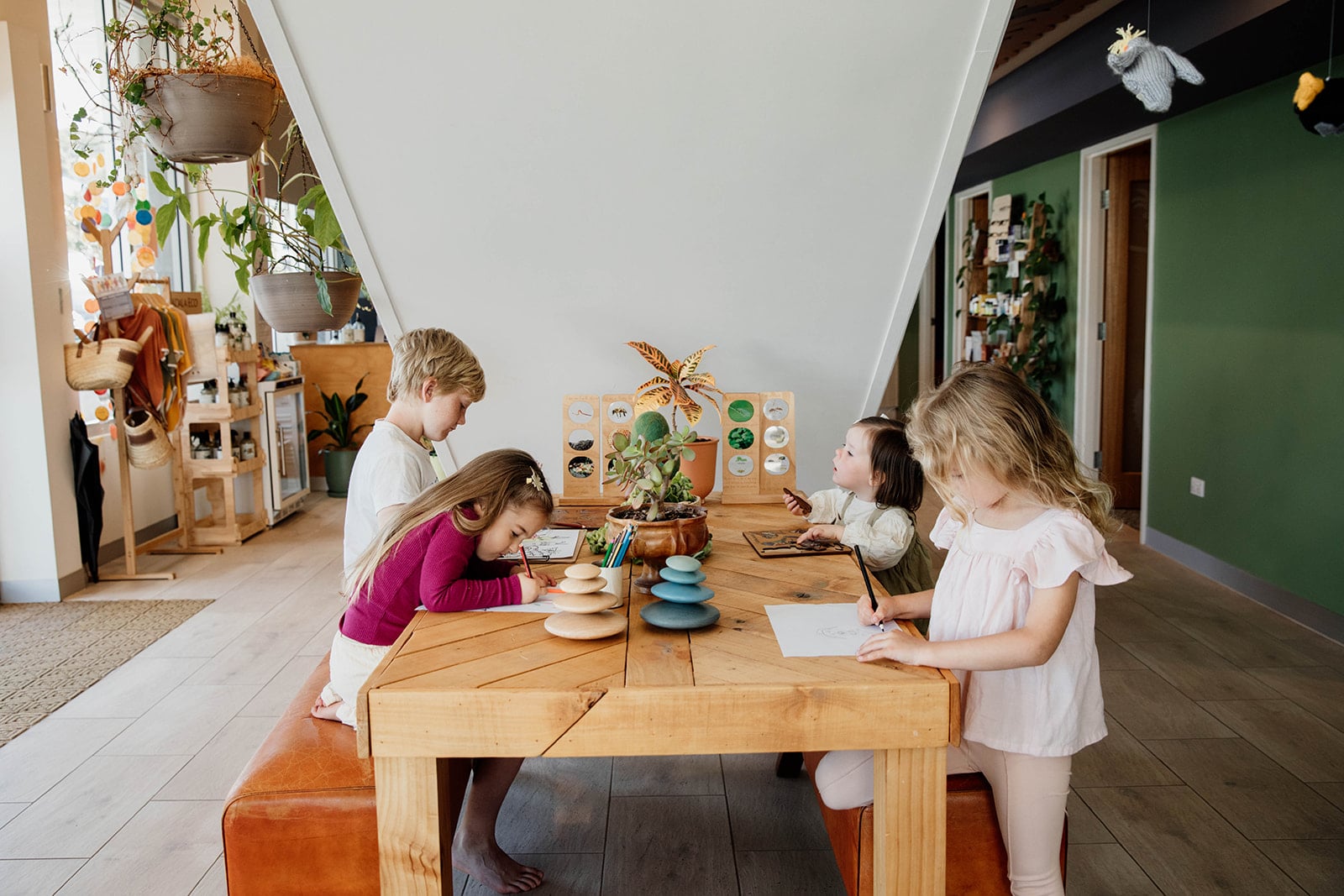
School readiness is about so much more than ABCs and 123s! From balancing and jumping to holding a pencil, movement plays an important role in your child’s development and learning. Discover the key physical skills that help prepare little ones for big school, along with simple, fun ways to encourage them at home
School readiness is more than ABCs and 123s
Starting school is an exciting milestone! While reading, counting and making friends come to mind, there's another important part of school readiness: movement!
Research shows that children with well-developed movement skills tend to perform better academically, particularly in attention, memory and learning [1,2]. From sitting upright to holding a pencil and playing with friends, these skills help prepare children for school.
Gross Motor Skills: The Big Movements
Gross motor skills involve larger muscles used for sitting, crawling, running and jumping, building on each other as children grow.
Crawling and Climbing: Crawling typically develops around 7–10 months, while climbing continues developing throughout childhood.
- Encourage: Floor play, reaching and climbing.
- Look Out For: Uneven crawling, difficulty navigating obstacles or avoiding climbing.
- What Gets in the Way: Stiffness, discomfort or limited movement opportunities.
Sitting and Standing: Postural strength develops in infancy as babies learn to sit and stand independently.
- Encourage: Tummy time, rolling and floor play.
- Look Out For: Slumping, difficulty sitting upright or needing extra support.
- What Gets in the Way: Reduced core strength or prolonged supported sitting before readiness.
Running and Jumping: Running follows walking, jumping with both feet around age 2 and hopping on one foot around age 4.
- Encourage: Outdoor play, jumping games and sports.
- Look Out For: Frequent falls, awkward movements or difficulty hopping.
- What Gets in the Way: Reduced strength, coordination or body awareness.
Throwing and Catching: By 4–6 years, many children can consistently catch a ball as hand-eye coordination improves.
- Encourage: Ball games and playful throwing.
- Look Out For: Difficulty catching, inaccurate throwing or avoiding ball games.
- What Gets in the Way: Difficulty tracking moving objects or coordinating movements.
Fine Motor Skills: The Little Movements
Fine motor skills involve smaller hand and finger movements needed for writing, cutting and dressing.
Pincer Grip: Around 9–12 months, babies begin picking up objects using their thumb and finger.
- Encourage: Finger-feeding, blocks and safe small objects.
- Look Out For: Difficulty picking up small items or relying on whole-hand grasping.
- What Gets in the Way: Reduced hand strength or coordination.
Drawing and Writing: Children progress from scribbling to shapes and pencil control throughout preschool.
- Encourage: Colouring, drawing and playdough.
- Look Out For: Difficulty copying shapes, holding pencils or avoiding drawing.
- What Gets in the Way: Reduced finger control or postural stability.
Cutting and Dressing: Scissors, buttons and zips require both hands to work together, developing throughout preschool.
- Encourage: Supervised cutting, threading and dressing games.
- Look Out For: Difficulty using scissors, buttons or zips.
- What Gets in the Way: Reduced hand strength or coordination between hands.
Balance: Keeping Steady
Balance involves the brain combining information from the eyes, inner ears, muscles and joints to keep children steady.
Static Balance: Staying steady while sitting or standing still.
- Encourage: Flamingo challenge - standing on one foot
- Look Out For: Excessive wobbling or difficulty holding a position.
- What Gets in the Way: Reduced core strength or difficulty processing balance information.
Dynamic Balance: Staying steady while moving through classrooms and playgrounds.
- Encourage: Hopscotch, balance beams and obstacle courses.
- Look Out For: Frequent falls or difficulty on uneven surfaces.
- What Gets in the Way: Reduced coordination or body awareness.
Supporting Your Child's Development
At ACCC, our chiropractors take a holistic, whole-child approach, recognising that the nervous system connects the brain and body to coordinate everyday functions. By supporting healthy spinal movement, we aim to support this important connection. Research explores how spinal adjustments may influence movement and body-position processing [4,5], and also help address discomfort limiting movement [6].
Supporting development can involve a team of professionals. Occupational therapists help with everyday skills, physiotherapists with movement and physical function, and speech pathologists with communication and oral function. At ACCC, we value working alongside these professionals to provide individualised care.
Every child develops at their own pace, and milestones are guides, not deadlines. Concerned about your child's movement or development? Book an assessment with our chiropractors to learn how we can support your child.
-
-
-
- Shi, P., & Feng, X. (2022). Motor skills and cognitive benefits in children and adolescents: Relationship, mechanism and perspectives. Frontiers in psychology, 13, 1017825. https://doi.org/10.3389/fpsyg.2022.1017825
- Jamie Cruz, E. D. (2024, April 4). The benefits of fine motor skills in early education -Article 23879. Continued Early Childhood Education. https://www.continued.com/early-childhood-education/articles/benefits-fine-motor-skills-in-23879#:~:text=Evidence%20increasingly%20suggests%20that%20both,children’s%20cognitive%20and%20academic%20skills
- Journal of Clinical Chiropractic Pediatrics : Editorial. (n.d.). https://jccponline.com/Subluxation-Vol17-01.html#:~:text=During%20the%20course%20of%20chiropractic%20care%20the%20child’s%20vocabulary%2C%20and,gross%20motor%20control%20dramatically%20improved
- Taylor, H. H., & Murphy, B. (2008). Altered sensorimotor integration with cervical spine manipulation. Journal of manipulative and physiological therapeutics, 31(2), 115–126. https://doi.org/10.1016/j.jmpt.2007.12.011
- Haavik, H., & Murphy, B. (2012). The role of spinal manipulation in addressing disordered sensorimotor integration and altered motor control. Journal of electromyography and kinesiology : official journal of the International Society of Electrophysiological Kinesiology, 22(5), 768–776. https://doi.org/10.1016/j.jelekin.2012.02.012
- Alcantara, J., & Davis, J. (2011). The chiropractic care of children with “Growing pains”: A case series and systematic review of the literature. Complementary Therapies in Clinical Practice, 17(1), 28–32. https://doi.org/10.1016/j.ctcp.2010.08.006
- Organization, C. R. (n.d.). Developmental advancements following chiropractic care in a four-year-old child with dyspraxia and associated developmental delays: A case report. https://chiro.org/Graphics_Box_PEDS/ABSTRACTS/Developmental_Advancements.shtml
-
-

Comments